The short answer: Get your well, septic, and road access documentation organized before you list. Then price your home using a rural comparative market analysis that accounts for acreage, utilities, access, and property-specific features—not just in-town Santa Fe sales.
Why Turquoise Trail Homes Need a Different Strategy
If you live off NM 14, the Turquoise Trail, through San Marcos, Cerrillos, Madrid, or the land in between, your home may be very different from an in-town Santa Fe listing. It deserves a marketing and pricing strategy that reflects those differences.
Buyers have more choices in the national housing market this year. According to the National Association of REALTORS® (NAR), existing-home inventory reached 4.9 months’ supply in August 2026, its highest level in more than ten years.
That national statistic doesn’t tell us exactly what’s happening along NM 14, but it reinforces why preparation, documentation, and realistic pricing matter.
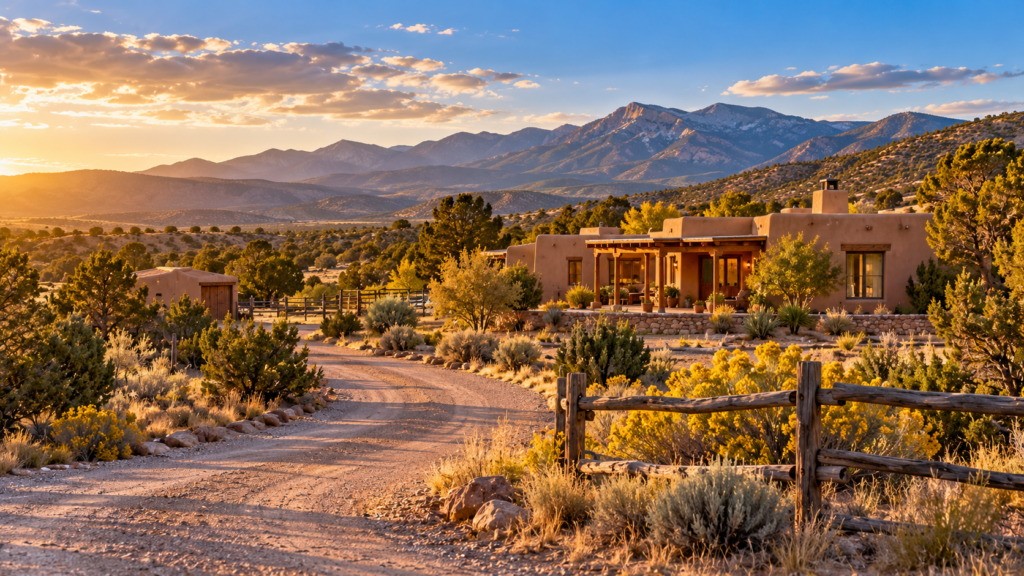
I know this corridor. Life here can mean open high-desert land, expansive mountain views, dark skies, and neighbors who appreciate having some space.
It can also involve unpaved-road maintenance, longer drives for groceries and medical care, and property-specific considerations such as private wells, septic systems, and propane.
The buyer who falls for your property may be drawn to that entire lifestyle. Your listing should describe both the appeal and the practical considerations honestly.
Step 1: Document Your Well, Septic, and Road Access
One of the most useful things you can do before listing a rural property is gather records that help buyers understand how the property functions.
Three important areas to review are water, wastewater, and access.
Well performance.
Gather your well permit, available well records, and recent water-quality results.
Consider arranging a current flow or production test with a qualified well professional, particularly if the well’s performance is uncertain.
Testing requirements vary by lender and loan type, so confirming expectations early can help prevent delays. Buyers may also request additional testing during their inspections.
A well with limited production isn’t automatically a deal-breaker, but having accurate information about its performance helps everyone make informed decisions.
Septic evaluation: required under New Mexico regulations.
The New Mexico Environment Department (NMED) generally requires a property-transfer evaluation when a property with an established on-site liquid-waste system changes ownership.
Under 20.7.3.902 NMAC, the evaluation must be performed by a qualified evaluator using a department-approved form.
A qualifying inspection or evaluation completed within 180 days of the transfer may satisfy the requirement.
If your septic system was never permitted, registration or permitting may be necessary. Researching the permit history early can help avoid unexpected delays.
If the evaluation identifies problems, review the findings and applicable NMED requirements before deciding how to proceed.
Some deficiencies require permitting or corrective action, and the timing and responsibility for repairs should be addressed before closing.
Understanding these issues early can help prevent unexpected delays or negotiations.
For details, review the New Mexico Environment Department’s property-transfer requirements.
Legal road access.
Many homes along the corridor are reached by unpaved county roads or private roads.
Confirm what legal access exists through recorded deeds, easements, or other relevant documents.
In New Mexico, recorded access rights and access established through historical use can involve different legal considerations.
If access depends on an informal arrangement with a neighbor, review it with a qualified title or real estate professional before listing.
Legal access and maintenance responsibilities may need to be clarified.
Step 2: Price From Rural Comparables, Not City Sales
One of the biggest pricing mistakes a rural homeowner can make is relying too heavily on sales that don’t reflect the property’s location and characteristics.
A home along the Turquoise Trail may have little in common with a similarly sized property inside Santa Fe city limits.
In rural areas, comparable properties may be farther apart, so an effective pricing analysis may need to consider sales across a wider geographic area while accounting for meaningful differences between properties.
Online automated valuations can also be less useful when properties differ significantly in acreage, utilities, improvements, and access.
A sound rural pricing analysis weighs the features that actually contribute to value:
- Acreage: Total land area, including how much is usable versus steep terrain or arroyo.
- Water: Well production, water infrastructure, and any documented water rights.
- Improvements: Outbuildings, barns, studios, workshops, and permitted structures.
- Access: Road quality, maintenance responsibilities, and legal access arrangements.
- Setting: Views, privacy, topography, and orientation toward surrounding mountain ranges.
Metro-wide and national median prices provide useful background, but they won’t establish the appropriate asking price for an individual rural property.
Ask your agent for a comparative market analysis that considers relevant Turquoise Trail sales and adjusts for meaningful differences in acreage, utilities, improvements, and access.
That creates a more defensible foundation for your listing price.
Step 3: Market the Lifestyle, Not Just the House
Buyers exploring the Turquoise Trail may be drawn to its open spaces, views, and rural lifestyle.
Some are relocating, while others already live in Northern New Mexico and want a different setting.
Your marketing should help them understand both the home and the land around it.
Photography that shows the land.
Interior-only photographs may not fully communicate what makes a rural property appealing.
Professional photography can show how the home sits within its landscape, how outdoor spaces connect to the residence, and what buyers can expect from the setting.
Golden-hour photography may work particularly well when the property’s views and natural light are important features.
Drone photography can also help illustrate terrain, the home’s setting, and surrounding landscape.
However, property boundaries should be verified through appropriate survey or title information rather than inferred from aerial imagery.
Lead with outdoor living and useful improvements.
Depending on the property, buyers may appreciate:
- Covered portals and outdoor spaces positioned toward mountain views.
- Fencing and improvements suitable for permitted property uses.
- Studios, workshops, and outbuildings for creative work or hobbies.
- Gardens and established landscaping that demonstrate how outdoor areas are maintained.
- Functional storage, parking, and access arrangements.
Only describe uses and improvements that can be supported by the property’s actual condition, permits, and applicable restrictions.
Tell the corridor’s story.
The Turquoise Trail is a National Scenic Byway connecting the Albuquerque and Santa Fe areas through historic communities such as Cerrillos and Madrid.
Its mining history, galleries, high-desert scenery, and distinctive communities are part of its appeal.
Help prospective buyers understand how the property’s location relates to Santa Fe, nearby communities, and everyday services.
Accurate travel information and useful local context are more valuable than exaggerated lifestyle promises.
Make sure your listing is presented through appropriate MLS and online marketing channels so prospective buyers can discover it.
Step 4: Build a Disclosure Package Up Front
Rural buyers often have questions about property restrictions, mineral rights, flooding, wildfire exposure, and utilities.
Preparing available documentation before listing can make the transaction easier to understand and help reduce unnecessary uncertainty.
Along with the well, septic, and access information from Step 1, consider gathering:
- Santa Fe County zoning information and applicable land-use restrictions.
- Available title documents and recorded mineral-rights reservations.
- FEMA flood maps and information about known drainage or arroyo concerns.
- Wildfire-risk information and documentation of mitigation improvements.
- Road-maintenance agreements for shared private roads.
- Well permits and any separately documented water rights.
- Recorded utility easements and other agreements affecting the property.
Not every document will apply to every property.
New Mexico real estate transactions have specific disclosure obligations, including requirements involving known adverse material facts.
The exact disclosures, documents, and investigations will depend on the property and transaction.
Working with your agent, title company, and appropriate specialists can help you prepare a useful information package without overlooking important issues.
Remember that an ordinary title review may identify recorded mineral-rights reservations without resolving every possible ownership question.
When mineral rights or access arrangements are uncertain, additional professional review may be appropriate.
Step 5: Time the Listing and Plan for Taxes
Spring and early summer can be appealing times to showcase rural properties, particularly when outdoor spaces and access conditions are easier to photograph and evaluate.
However, the best listing window depends on current local competition, property readiness, and buyer activity.
Use the months before listing to organize documentation, complete appropriate evaluations, and address property-preparation needs.
National housing statistics can provide context, but they shouldn’t determine your timing by themselves.
For example, NAR reported that home prices increased in 80% of metropolitan markets during the second quarter of 2026, compared with 71% in the first quarter.
That doesn’t mean every rural Santa Fe County property is appreciating at the same pace.
The most useful pricing and timing decisions will come from current local sales, competing listings, and the specific characteristics of your property.
If you’ve owned your home for many years, you may also have significant capital gains.
Talk with a qualified tax professional before making decisions based on potential tax consequences, especially if you’re considering changes to your residence or closing timeline.
You may also find my guide to the true cost of selling a home in Santa Fe helpful when estimating potential selling expenses.
Frequently Asked Questions
Do I need a well test before listing?
Not necessarily before listing, but having current well records and appropriate test results available can help.
Requirements depend on the buyer’s financing and the property’s circumstances.
Buyers may request water-quality or production testing during their inspections, so addressing questions early can help avoid delays.
How is selling off the Turquoise Trail different from selling in Santa Fe?
Rural properties may be valued partly for their acreage, views, access, privacy, and usable improvements.
Those features can change what needs to be documented, how the property should be marketed, and which comparable sales are most relevant.
Why can’t I rely on an online home value estimate?
Automated estimates may not fully capture the differences between rural properties.
A comparative market analysis that accounts for acreage, utilities, improvements, road access, and recent relevant sales is generally a stronger starting point for pricing.
Does my septic system have to be inspected before I sell?
New Mexico generally requires a property-transfer evaluation for an established on-site liquid-waste system before the property transfers.
The evaluation must follow NMED requirements and be completed by a qualified evaluator.
A qualifying inspection or evaluation completed within 180 days of the transfer may satisfy this requirement.
Unpermitted systems may require registration or permitting, and deficiencies may trigger additional regulatory steps.
Do mineral rights convey with the sale?
Not always.
Mineral rights can be separated from surface ownership, so sellers shouldn’t assume they automatically convey.
Available title documents may identify recorded reservations, but complicated ownership questions may require additional professional review.
How far is the Turquoise Trail from the Santa Fe Plaza?
It depends on the property’s location along NM 14.
Properties near San Marcos are considerably closer to Santa Fe than homes near Madrid or farther south.
Actual driving time also depends on the property’s access road and the route taken.
For buyers considering a rural property, it’s worth checking the drive personally rather than relying only on distance estimates.
The Bottom Line
Selling a home off the Turquoise Trail takes a different approach than selling in town.
Document the well, septic system, and access arrangements. Price from relevant rural comparable sales. And market the lifestyle honestly, including the practical features that make the property work.
I was born and raised in Santa Fe, and I bring more than seven years of real estate experience, local knowledge, and my Pricing Strategy Advisor (PSA) certification to the clients I serve.
If you’re thinking about selling a property along the Turquoise Trail, I’d be happy to help you evaluate its features, review comparable sales, and discuss a pricing strategy suited to your goals.
Lori Montoya | Barker Realty
Call or text: (505) 577-8750
Website: santafewithlori.com
Honest. Local. Personal. The way real estate should be!
References:
National Association of REALTORS® — August 2026 Existing-Home Sales
National Association of REALTORS® — Q2 2026 Metropolitan Home Prices
New Mexico Environment Department — Property Transfer Evaluations