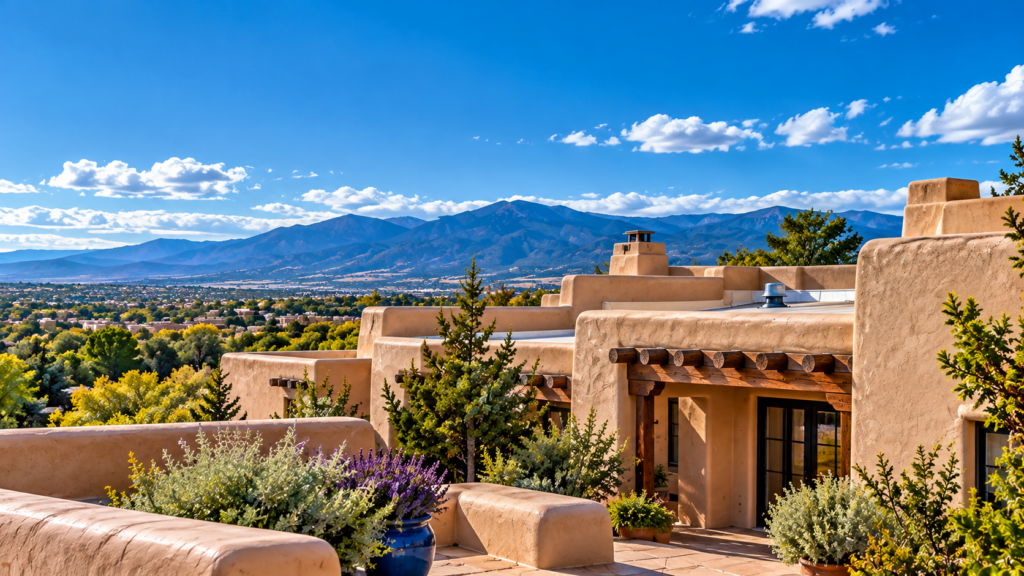
Flat roofs define Santa Fe’s skyline, but they need more hands-on care than pitched roofs, and a neglected one can create costly surprises when it’s time to sell.
If you own a home in Santa Fe, there’s a good chance it has a flat or low-slope roof. Pueblo Revival and Territorial architecture are known for them. Here’s what I tell sellers I work with: the roof is often one of the most closely examined features during a buyer’s inspection, and its condition can have a significant effect on the sale.
Why Flat Roofs Need More Attention
Both pitched and low-slope roofs rely on proper drainage. A flat roof typically depends on three things to keep water out: an intact roofing membrane or waterproofing surface, well-sealed penetrations (vents, pipes, and HVAC curbs), and working drains, scuppers, and canales.
When any of these components fails, water can accumulate, damage roofing materials, and potentially find its way into the home.
Santa Fe’s climate makes regular maintenance especially important. At roughly 7,200 feet, roofs experience intense sun and UV exposure. Add wide daily temperature swings, monsoon downpours, and winter snow, and roofing materials must withstand repeated changes in temperature and moisture. Over time, those conditions can affect membranes, seams, sealants, and flashings.
A flat roof isn’t a problem. An unmaintained one can be, and buyers’ inspectors pay attention to the difference.
How a Bad Roof Can Derail Your Sale
Roof problems can complicate a real estate transaction in several ways:
- The inspection flags trouble: Ceiling stains, active leaks, or deterioration in the roofing membrane raise questions about the roof’s condition.
- The buyer pushes back: The buyer may request repairs, a price reduction, or a credit toward future roofing work. Depending on the contract and circumstances, an unresolved issue could also affect the transaction.
- You may lose negotiating leverage: If significant roof problems remain unresolved, future buyers may raise similar concerns.
Replacement costs can be substantial, depending on the size, materials, and condition of the roof. Negotiating repairs or credits after an inspection may leave sellers making decisions under tighter deadlines.
When buyers are comparing properties, the condition of a roof can influence how they evaluate the overall cost and maintenance needs of a home.
A Smart Pre-Listing Step: Have Your Roof Inspected
Before you list, consider having a properly licensed New Mexico roofing contractor inspect and service the roof.
Depending on the roof’s condition, a typical maintenance visit may include:
- Clearing drains, scuppers, and canales
- Inspecting and, where appropriate, resealing flashings and penetrations around vents, pipes, and HVAC curbs
- Checking the membrane or roofing surface for blistering, cracking, or UV-related deterioration
- Looking for ponding water that may signal drainage problems
- Removing debris that traps moisture or blocks drainage
The key is documentation.
A recent written roofing report, along with receipts for completed maintenance or repairs, gives buyers useful information about the roof’s condition. It may help address concerns early, although buyers can still request their own inspections or negotiate over findings.
You don’t necessarily need a new roof. An experienced contractor can help determine whether the existing system is sound, requires targeted work, or needs more extensive repairs.
Schedule this well before your listing date so there’s time to address anything the roofer finds.
For broader guidance on preparing a property before selling, see my article, Why a Pre-Listing Home Inspection in Santa Fe Gives Sellers the Upper Hand.
Ongoing Maintenance Schedule
Whether or not you plan to sell, arrange regular roof inspections, ideally in spring and fall, along with additional checks after significant storms. Your roofing contractor can recommend the right schedule based on the roof’s age, materials, condition, and warranty requirements.
Between professional visits, watch for visible warning signs from a safe location:
- After major storms: Look for signs of drainage problems, water stains, or damage that may need professional attention.
- Each spring: Have flashings, sealants, and the roofing surface checked for deterioration following winter weather.
- Each fall: Have debris cleared and confirm that drains, scuppers, and canales are working before colder weather arrives.
Don’t climb onto a wet, icy, or potentially damaged roof. Leave rooftop inspections and repairs to qualified professionals with the appropriate safety equipment.
Catching a small problem early may help prevent more extensive damage to insulation, framing, drywall, and interior finishes, especially if a leak might otherwise go unnoticed until a buyer’s inspection.
Repair or Replace?
It depends on the roof’s age, material, condition, and drainage performance. A qualified roofer’s assessment is essential.
As a general guide:
- Localized issues: Minor flashing or sealant problems on an otherwise sound roof may be suitable for targeted repairs and documented maintenance.
- Widespread deterioration: Extensive cracking, repeated leaks, or significant membrane failure may require more substantial work.
- Persistent ponding water: The roofer should determine whether drainage improvements or other corrections are needed rather than simply patching the surface.
- At or near the end of its expected service life: Consider the cost and benefits of replacement before listing, including the property’s condition and likely buyer concerns.
Replacing a roof before you sell isn’t automatically the best financial choice. Compare the available repair and replacement options, consider your selling timeline, and discuss how each approach may affect your listing strategy.
Replacement costs depend on square footage, roofing materials, decking condition, drainage, and the number of penetrations or other details requiring work.
Get at least two written estimates before making a major repair or replacement decision.
Frequently Asked Questions
How long does a flat roof last in Santa Fe?
It depends on the roofing system, installation quality, age, exposure, and maintenance history. Santa Fe’s sun, temperature changes, monsoon rains, and winter weather make ongoing care important. A qualified roofer can assess its present condition and provide guidance on its remaining service life.
What are common causes of flat roof leaks here?
Problems with flashings and sealants, damaged roofing materials, and blocked drains, scuppers, or canales can contribute to leaks. Ponding water can also indicate a drainage problem that needs professional evaluation.
What should I look for on my own?
Watch for water that remains standing after storms, visible drainage blockages, staining on exterior walls, and water stains or soft spots on interior ceilings. Have a roofing professional investigate any concerns rather than attempting an unsafe rooftop inspection.
When is the best time for an inspection?
Spring and fall are sensible times for regular inspections, with additional checks after significant storms. If you’re selling, arrange a professional assessment well ahead of your listing date so there’s time to evaluate and address potential problems.
The Bottom Line
Your flat roof is part of what makes your Santa Fe home special, but it needs active care, and when you sell, its condition can become an important part of the conversation.
Maintain it regularly, document completed work, and consider a professional assessment before you list. Good preparation won’t eliminate every inspection concern, but it can help you make informed decisions before negotiations begin.
I’m Lori Montoya, Associate Broker with Sotheby’s International Realty, a Certified Santa Fe Specialist (SFeS), and a Pricing Strategy Advisor (PSA). I spent seven years as an Associate Broker with Barker Realty and have closed 85 real estate transactions across Santa Fe and Santa Fe County.
If you have questions about preparing your home for sale, roof or otherwise, call me at 505-577-8750.
Lori Montoya
Associate Broker | Sotheby’s International Realty
Santa Fe with Lori
https://santafewithlori.com/