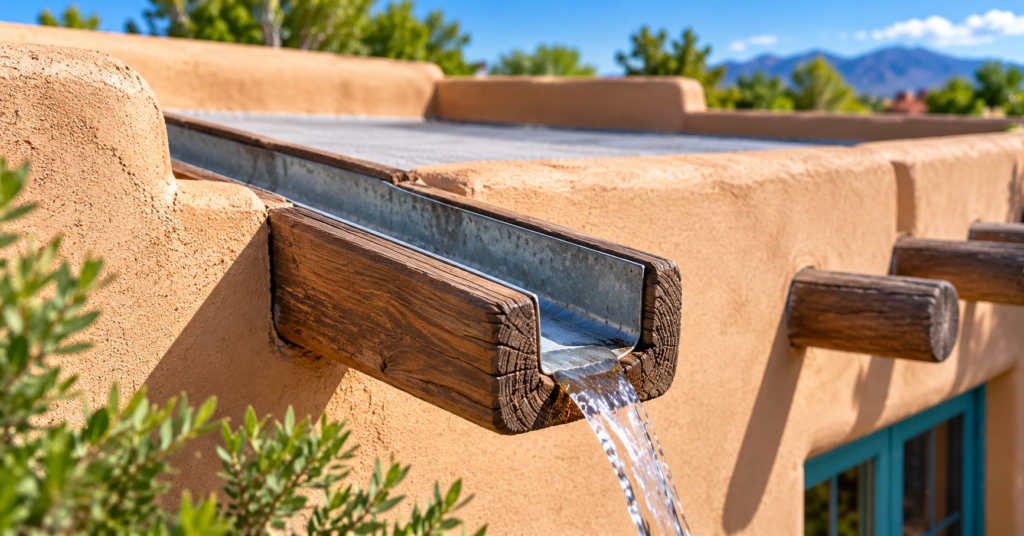
Why Canales Matter
Canales are the short drainage troughs that carry water off a flat roof and through its parapet wall. On a Santa Fe adobe or Pueblo Revival home, they are an important defense against water damage to the roof, walls, and foundation, and their condition can become a significant part of a home inspection.
In my work with buyers and sellers across Santa Fe and Santa Fe County, blocked or deteriorated canales have been among the inspection concerns I’ve encountered on adobe-style homes. Problems with drainage can lead to repair requests, negotiations, or additional questions from buyers and lenders.
Whether you are selling your home or relocating here to buy, here’s what you need to know.
What a Canale Is and How It Works
A canale (plural: canales, pronounced “kah-NAH-les”) is a narrow trough, traditionally made of wood and often lined with metal, that passes through the parapet surrounding a flat roof.
It performs a function similar to a gutter and downspout on a pitched roof, but it projects beyond the wall so rainwater can fall clear of the adobe or stucco below.
Along with vigas and portales, canales are a distinctive feature of Santa Fe architecture.
Here’s how they work:
- Rain and snowmelt flow across the gently sloped roof toward the drainage openings.
- The canale carries water through the parapet.
- The water exits beyond the wall, where proper drainage should direct it away from the home and foundation.
How many canales does a roof need?
The New Mexico Office of the State Engineer’s Roof-Reliant Landscaping manual cites an older City of Santa Fe guideline suggesting that a typical canale should drain no more than approximately 400 square feet of roof area.
That is useful historical design guidance, but it should not be treated as a universal current code requirement for every existing home. The appropriate number, size, and placement of canales depend on roof area, drainage design, and applicable building requirements.
Older homes with additions may have drainage systems that deserve closer evaluation, especially during heavy monsoon rains.
A qualified roofing professional can help determine whether the existing arrangement is adequate.
What New Mexico Building Code Requires
The 2021 New Mexico Residential Building Code, adopted through 14.7.3 NMAC, includes specific requirements for canales and scuppers.
Section R905.9.5 addresses two important details:
- Metal pan lining. Canales and scuppers must have metal pan lining extending at least six inches past the inside of the parapet and at least six inches to each side of the opening.
- Positive drainage. Canales and scuppers must be designed to allow water to drain properly rather than remain trapped.
These requirements are relevant to work covered by the applicable residential code, including qualifying construction and roofing alterations.
An older home is not automatically in violation simply because it was built under an earlier code. Whether improvements are required depends on the property, the work being performed, and the rules that apply.
But missing or deteriorated lining, inadequate drainage, and standing water are all conditions worth investigating.
As a Certified Santa Fe Specialist (SFeS) and Pricing Strategy Advisor (PSA), I help clients understand how property-condition concerns can affect their real estate decisions.
For the technical requirements, refer to the New Mexico Residential Building Code.
What Happens When Canales Are Neglected
A clogged or deteriorated canale can allow water to accumulate where it shouldn’t, potentially damaging the roof and surrounding walls.
Three concerns are particularly important in Santa Fe:
Ponding and membrane damage. When leaves, dirt, or nesting materials block a canale, water may collect on the roof. Persistent standing water can contribute to deterioration of roofing materials and problems around the parapet.
Freeze-thaw damage. Santa Fe’s winters bring freezing temperatures and snowmelt. North-facing canales, particularly those in shaded areas, can be vulnerable to ice buildup. The State Engineer’s guide specifically discusses freezing concerns around north and northeast roof locations.
Wall and foundation moisture. A damaged canale, failed lining, or outlet that doesn’t project far enough may direct water down the exterior wall. Over time, repeated moisture exposure can damage stucco or adobe and contribute to problems near the foundation.
The important point is that a relatively small drainage component can affect a much larger part of the home.
How Canale Condition Affects a Sale
Home inspectors evaluating Santa Fe flat-roof properties may examine several features of the drainage system:
- Blockages: Leaves, dirt, nests, or plant growth obstructing drainage.
- Lining condition: Rust, separation, deterioration, or missing metal lining.
- Drainage capacity: Whether the number and placement of canales appear adequate for the roof.
- Signs of ponding: Standing water, staining, or visible roof-surface deterioration.
- Projection: Whether water exits beyond the wall and is directed away appropriately.
For sellers: Records of regular maintenance, completed repairs, and professional roof assessments can help address potential buyer concerns before negotiations.
They do not guarantee that a buyer’s inspector will find no problems, but they can provide useful documentation.
For buyers: If you’re relocating from out of state, canales may be unfamiliar. Understanding their condition during your inspection period can help you evaluate maintenance needs and potential repair costs.
One out-of-state client relied on me to attend her property inspections and explain the findings through a video call. That’s one way I help buyers understand features that may be different from homes they’ve owned elsewhere.
What about financing?
Significant unresolved roof leaks or moisture-related damage can raise concerns for lenders, particularly under loan programs with property-condition requirements.
Whether repairs are required before closing depends on the specific defect, appraisal findings, lender, and loan program. Not every maintenance issue automatically delays or prevents a sale.
How to Maintain Canales Year-Round
A practical starting point is to inspect and clear canales at least twice a year, with additional attention after significant storms.
Mid-June, before monsoon season
Have debris removed, check the condition of linings, and confirm that water can exit the roof without flowing back toward the building.
Fall, before the first freeze
Remove accumulated leaves and debris, look for signs of deterioration after summer storms, and address drainage concerns before freezing weather.
During a professional inspection, important areas include:
- The canale body: Look for cracks, splits, deterioration, or rot in wooden components.
- The metal lining: Check for corrosion, separation, gaps, or other damage.
- The outlet: Confirm that water exits away from the wall.
- The surrounding roof: Look for signs of ponding, staining, or damage near the parapet.
Be careful with screens and covers. Screens placed directly over drainage openings can trap debris if they are not properly designed and maintained. Ask a qualified professional whether a screen is appropriate for your system rather than assuming one will prevent clogging.
Safety comes first. Look for visible drainage problems from a safe location. Don’t climb onto an icy, wet, or potentially damaged roof. Leave elevated cleaning, liner inspections, and repairs to properly qualified professionals when roof access presents a hazard.
Repairs That Preserve Santa Fe’s Architectural Character
The good news is that not every damaged canale requires a complete redesign.
Depending on its condition, a deteriorated wooden canale may be suitable for repair or a compatible metal lining. Some drainage systems can also be adapted to connect with appropriately designed downspouts.
Any repair should preserve proper drainage and ensure that connections are watertight. A poorly installed connection can create new opportunities for water to enter the roof or walls.
A special consideration for historic homes: If your property is within one of Santa Fe’s designated historic districts, contact the City’s Historic Preservation Division before altering or replacing visible canales.
The City can help determine whether your proposed work requires administrative review or another form of approval.
See the City of Santa Fe Historic Preservation Division for guidance.
With 85 closed real estate transactions and 47 five-star client reviews, I’ve helped buyers and sellers navigate property-condition questions that can influence their decisions.
Quick Answers
What is a canale?
A short drainage trough that passes through the parapet of a flat roof, carrying rainwater and snowmelt away from the roof and exterior walls.
How many canales does a home need?
The State Engineer’s older roof-reliant landscaping guide cites approximately one canale per 400 square feet of roof area as a typical guideline. Actual drainage needs depend on the roof design, size, and applicable requirements.
What does New Mexico building code require?
Section R905.9.5 of the 2021 New Mexico Residential Building Code specifies metal pan lining extensions of at least six inches beyond the inside of the parapet and six inches to each side of the opening, along with positive drainage. Applicability to a particular existing property or project should be confirmed with a qualified professional or building official.
How often should canales be cleaned?
Twice a year is a practical starting point, including before monsoon season and before winter. Additional inspection or cleaning may be needed after major storms or where debris accumulates frequently.
Will canale problems affect my sale?
They can. Significant drainage defects may raise inspection concerns and lead to repair requests or negotiations. The effect on a particular transaction depends on the property’s condition and the buyer’s financing and contract terms.
Let’s Talk
Canales aren’t just decorative. They’re an important part of how Santa Fe’s traditional flat-roof homes manage water.
Regular maintenance is one of the simplest ways to help protect your roof and walls, especially during monsoon season and winter weather.
If you’re buying or selling a home in Santa Fe or Santa Fe County and have questions about how canale condition might affect your plans, I’m happy to help.
I was born and raised here, and understanding the details of our local homes is part of the knowledge I bring to my clients.
Lori Montoya
Associate Broker | Sotheby’s International Realty
Certified Santa Fe Specialist (SFeS) | Pricing Strategy Advisor (PSA)
Call/Text: 505-577-8750
Website: https://santafewithlori.com/
Sources and Helpful Resources
- New Mexico Residential Building Code — 14.7.3 NMAC
- New Mexico Office of the State Engineer — Roof-Reliant Landscaping
- City of Santa Fe — Historic Preservation Division
- New Mexico Regulation and Licensing Department — Construction Industries Division
This article provides general homeowner and real estate information, not a property-specific roofing inspection, code-compliance determination, or legal or lending opinion. Consult qualified professionals about your property’s condition and applicable requirements.