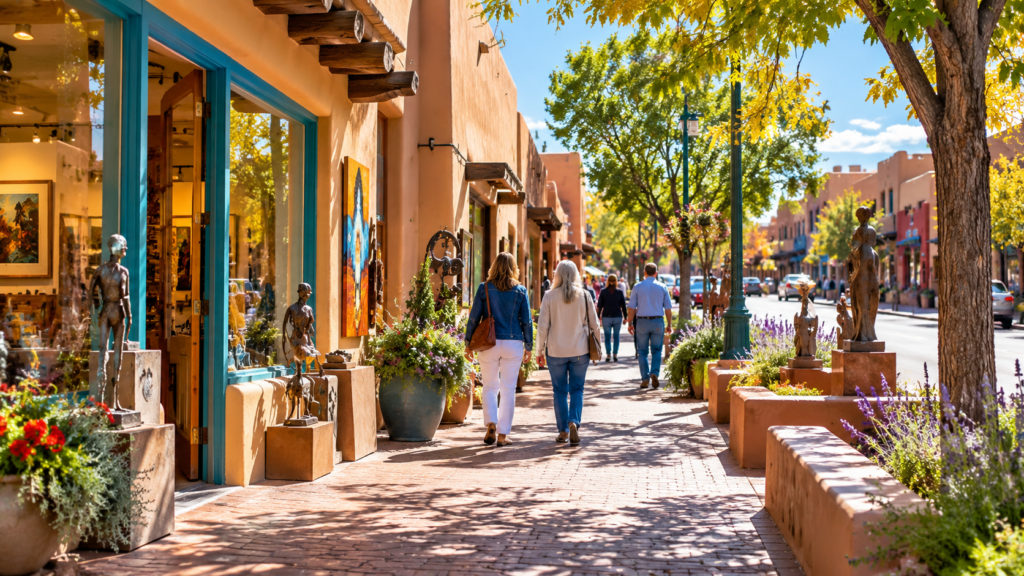
What draws buyers to Santa Fe, New Mexico?
For many people, it is a combination of things: art and culture, mountain scenery, distinctive architecture, outdoor recreation, and the opportunity to find a home that fits the way they want to live.
Some buyers are drawn to walkable neighborhoods near downtown. Others want more land, open views, or a quieter setting outside the city.
As someone born and raised in Santa Fe, I enjoy helping people discover what makes this community special. Just as importantly, I want buyers to understand the practical differences between living here and visiting.
If you are considering a move, here are some of the reasons Santa Fe may be worth exploring.
Why Moving to Santa Fe Matters Right Now
Santa Fe has experienced measured population growth in recent years.
According to the U.S. Census Bureau, the City of Santa Fe had an estimated 89,837 residents as of July 1, 2025, an increase of 2.7% from its April 2020 population estimates base.
Santa Fe County, which includes the city and surrounding areas, had an estimated 156,907 residents, representing 1.3% growth over the same period.
These figures show gradual population growth, although population statistics alone do not explain why people move or predict future housing-market conditions.
For buyers, the more useful question is whether Santa Fe offers the type of home, location, and everyday experience they are looking for.
That is where local knowledge becomes especially valuable.
The Santa Fe Lifestyle Is the Reason People Relocate
Santa Fe has a character that is difficult to capture in listing photographs alone.
Its architecture, cultural traditions, food, landscape, and pace of life create an experience that feels distinctly Northern New Mexican.
You see that character in the historic streets around the Plaza, the galleries along Canyon Road, neighborhood restaurants, and the surrounding mountain landscape.
Architecture is particularly meaningful here.
Santa Fe includes traditional adobe construction as well as Pueblo Revival, Territorial, and other Southwestern architectural styles. Features such as vigas, kiva fireplaces, stucco exteriors, and courtyards contribute to the city’s visual identity.
However, a home’s architectural appearance does not necessarily tell you how it was constructed.
That distinction matters when evaluating maintenance, materials, and property condition.
For buyers exploring Santa Fe, I encourage spending time beyond the familiar visitor destinations. Visit neighborhoods, explore local businesses, and experience how different parts of town feel throughout the day.
Finding the right community is about more than loving how it looks.
It is about understanding how you would actually live there.
Open Spaces and Land Draw Buyers to Santa Fe County
One of Santa Fe’s appealing characteristics is the contrast between its historic urban areas and the more open landscapes surrounding them.
Santa Fe County had approximately 81 residents per square mile in 2020, according to Census data.
Outside more developed parts of town, buyers can explore properties with larger parcels, mountain views, and different levels of privacy.
What Open-Space Properties Offer in Santa Fe
Depending on the property, buyers may find opportunities for:
- Additional space and privacy, with greater separation between neighboring homes.
- Mountain and high-desert views, including surrounding mesas and the Sangre de Cristo Mountains.
- Outdoor activities, such as gardening, recreation, or keeping animals where permitted.
- A closer connection to the landscape, including piñon, juniper, and native high-desert surroundings.
Of course, not every acreage property offers the same benefits.
Views, access, water sources, utilities, zoning, animal-use permissions, and covenants can vary significantly.
For example, a property advertised as horse-friendly still deserves careful review of its permitted uses, water availability, and practical requirements.
Buyers should also consider how much land they are comfortable maintaining.
A larger property can offer wonderful possibilities, but understanding its responsibilities is just as important as appreciating its setting.
Walkable Santa Fe Neighborhoods Attract a Different Kind of Buyer
Not every buyer looking at Santa Fe wants acreage.
Some prefer being close to restaurants, galleries, cultural attractions, and other places they visit regularly.
Santa Fe offers several districts where walking can be an enjoyable part of everyday life.
The Plaza, Canyon Road, and the Railyard District
The historic Plaza anchors Santa Fe’s downtown area, surrounded by shops, restaurants, galleries, and cultural destinations.
Nearby, Canyon Road is known for its extensive collection of art galleries, while the Railyard District offers another gathering place with restaurants, shops, the Santa Fe Farmers’ Market, and SITE Santa Fe.
These areas offer opportunities to experience local culture without necessarily planning a full day around it.
However, walkability depends on the specific property.
A home near downtown may provide convenient access to galleries and restaurants while still requiring a vehicle for grocery shopping, medical appointments, or other errands.
For buyers who prioritize walking, I recommend considering the actual routes they expect to use.
Sidewalk conditions, parking, street crossings, distance, and the surrounding terrain can make a meaningful difference.
A neighborhood’s appeal should match your everyday needs, not simply its proximity to a popular destination.
Arts, Culture, and the Creative Economy in Santa Fe
Santa Fe’s cultural identity is one of its most recognizable characteristics.
According to TOURISM Santa Fe, the city is home to more than 250 galleries and 20 museums.
Canyon Road alone features more than 100 galleries representing a wide range of artistic traditions and styles.
The Georgia O’Keeffe Museum, Santa Fe Opera, Santa Fe Indian Market, and other cultural institutions contribute to a lively calendar of exhibitions, performances, and community events.
These experiences are not limited to visitors.
For residents, they can become a regular part of life.
Why the Creative Economy Matters for Buyers
If arts and culture are important to you, the location of your home may affect how easily you can enjoy them.
A property near the Plaza or Canyon Road might make visiting galleries and restaurants more convenient.
A home farther outside the city may offer a quieter setting while requiring additional driving.
Neither option is automatically better.
I encourage buyers to think about the activities they would like to enjoy regularly and how their preferred neighborhoods support those interests.
That is a more practical way to evaluate lifestyle than simply choosing a home based on its appearance.
Climate and Outdoor Living Make Santa Fe Appealing
Santa Fe sits at approximately 7,000 feet above sea level, near the foothills of the Sangre de Cristo Mountains.
The city experiences four distinct seasons, abundant sunshine, and a relatively dry climate.
Summers can bring warm days and cooler evenings, while winters include freezing temperatures and snowfall.
Year-Round Outdoor Access in Santa Fe
Outdoor recreation is one of the reasons many people enjoy the area.
Popular options include:
- Ski Santa Fe, approximately 16 miles from the historic Plaza.
- Hiking and trail running in the Sangre de Cristo Mountains and surrounding foothills.
- Mountain biking on trails throughout the area.
- Horseback riding and birdwatching, depending on location and season.
- Exploring the Rio Grande corridor and other Northern New Mexico landscapes.
Outdoor conditions change throughout the year, and mountain recreation can involve additional travel, preparation, and weather considerations.
For buyers relocating from a different climate, I recommend visiting during more than one season when possible.
The elevation, dry conditions, winter weather, and daily temperature changes are worth experiencing firsthand.
Santa Fe’s landscape may be part of what initially attracts you, but understanding the climate helps you decide whether it fits your everyday life.
Remote Work and Retirement Relocations to Santa Fe
People consider relocating for many reasons, including changes in their careers, greater flexibility, family circumstances, and plans for retirement.
Santa Fe offers different possibilities depending on those priorities.
Remote Workers Choosing Santa Fe
For buyers who work remotely, Santa Fe may offer an opportunity to live somewhere that reflects their personal interests while maintaining their careers.
But a beautiful setting is only one consideration.
Before purchasing, remote workers should confirm:
- Internet service availability and reliability at the specific property.
- Space for a suitable home office.
- Mobile coverage and utility reliability.
- Access to transportation and other necessary services.
- Whether the location supports their preferred daily routine.
Internet access can differ between neighborhoods and rural properties, so it is important to verify service rather than assume it will meet your needs.
Retirees Drawn to Santa Fe’s Quality of Life
For those considering retirement, Santa Fe offers an appealing combination of arts, dining, outdoor recreation, and varied housing options.
However, choosing a retirement destination involves more than lifestyle.
Housing costs, property maintenance, taxes, health-care access, and transportation should all be part of the decision.
CHRISTUS St. Vincent Regional Medical Center serves Santa Fe and the surrounding region, but buyers should verify that the medical providers and specialists they need are available and accept their coverage.
New Mexico also offers certain retirement-income tax provisions, with eligibility depending on individual circumstances.
I recommend discussing those details with a qualified tax professional.
For a more detailed look at retirement planning, you can also read my guide: Why Santa Fe Is a Great Place to Retire in New Mexico.
Frequently Asked Questions About Moving to Santa Fe
What makes Santa Fe different from other places to retire?
Santa Fe combines distinctive architecture, arts and cultural attractions, mountain scenery, and opportunities for outdoor recreation.
Whether it is the right retirement destination depends on your budget, health-care needs, preferred housing, and lifestyle.
I recommend visiting during different seasons and exploring the neighborhoods you would realistically consider living in.
Is Santa Fe growing too fast?
Santa Fe has experienced measured population growth in recent years.
Census estimates show the city’s population increased 2.7% between its April 2020 estimates base and July 2025.
However, population growth alone does not tell us whether housing supply, transportation, public services, or infrastructure are keeping pace.
Those considerations should be evaluated separately when researching a potential move.
Can I find land and acreage near Santa Fe?
Yes. Santa Fe County offers properties with larger parcels and a variety of rural and semi-rural settings.
Depending on the property, buyers may find mountain views, outdoor space, or greater separation from neighboring homes.
Water sources, utilities, access, zoning, covenants, and permitted uses should be reviewed carefully before purchasing.
What neighborhoods in Santa Fe are walkable?
Areas around the historic Plaza, Canyon Road, and Railyard District offer convenient access to various cultural attractions, restaurants, and shops.
However, walkability varies by address.
Buyers should consider distances, sidewalks, street crossings, terrain, and the specific destinations they plan to visit regularly.
Is Santa Fe a good place for remote workers?
Santa Fe may appeal to remote workers who value its arts, landscape, and outdoor recreation.
Before relocating, confirm that a specific home has reliable internet, sufficient workspace, and access to the services you need.
Those practical details matter just as much as the lifestyle.
What is the art scene like in Santa Fe?
Santa Fe has an extensive arts community, including galleries, museums, public events, and performing-arts organizations.
Canyon Road is particularly well known for its galleries, while the Georgia O’Keeffe Museum, Santa Fe Opera, Indian Market, and SITE Santa Fe contribute to the city’s broader cultural life.
How does the climate in Santa Fe compare with other parts of New Mexico?
Because of its elevation of approximately 7,000 feet, Santa Fe generally experiences cooler conditions than many lower-elevation New Mexico communities.
The city has four distinct seasons, with warm summers, cold winters, and occasional snowfall.
Visitors should also be prepared for the altitude and relatively dry climate.
Do people from out of state buy homes in Santa Fe?
Yes. Santa Fe attracts buyers from outside New Mexico as well as people relocating within the state.
Their motivations and budgets vary.
As a local broker, I can help relocating buyers explore neighborhoods, understand property differences, and prepare for the home-buying process.
What kind of homes are available in Santa Fe?
Buyers can explore traditional adobe homes, Pueblo-style and Territorial-style properties, condominiums, townhomes, newer construction, and homes on larger parcels.
The available options depend on location, budget, and current inventory.
It is important to consider construction materials, maintenance requirements, property condition, and any applicable HOA rules.
Should I visit Santa Fe before deciding to move?
Absolutely.
I encourage buyers to spend time exploring the neighborhoods they are considering rather than limiting their visit to tourist attractions.
Visit grocery stores, explore driving routes, experience the weather, and consider how each location would fit your daily routine.
A home may look wonderful online, but visiting can help you better understand its surroundings and whether the area feels right for you.
The Bottom Line on Moving to Santa Fe
Santa Fe offers a distinctive combination of history, culture, architecture, outdoor recreation, and residential settings.
Some buyers are drawn to the convenience of downtown neighborhoods. Others prefer larger properties surrounded by open space.
The right choice depends on what matters most to you.
As someone born and raised in Santa Fe, I enjoy helping buyers look beyond the listing photos and understand the practical details of different neighborhoods and homes.
I am Lori Montoya, an Associate Broker with Barker Realty, a Certified Santa Fe Specialist, an Accredited Buyer’s Representative, and a Pricing Strategy Advisor.
If you are considering moving to Santa Fe, I would be happy to help you explore your options and find a home that fits your priorities.
Call or text me at 505-577-8750, or visit SantaFeWithLori.com.
Honest. Local. Personal. The way real estate should be!